
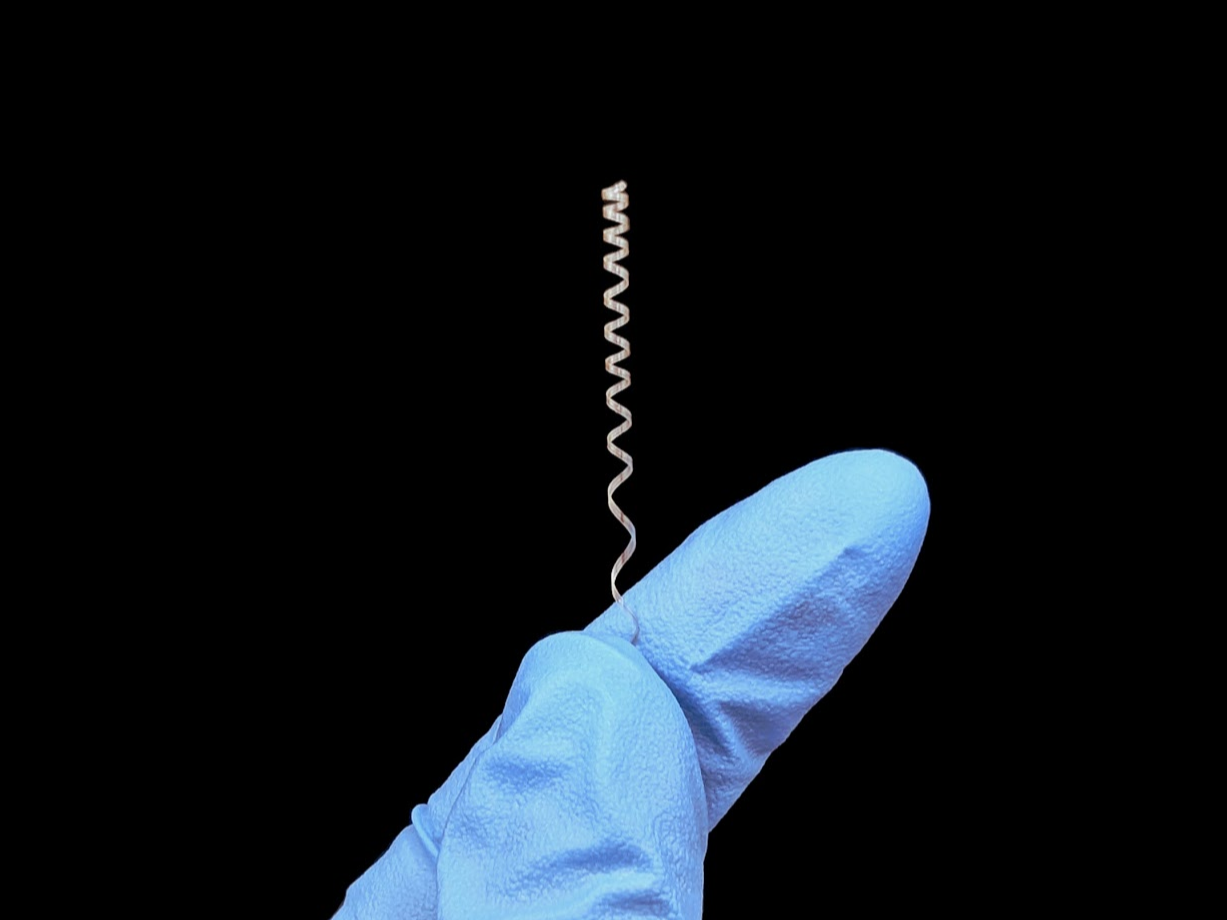
Financing strengthens momentum as the company advances its endovascular neuromodulation platform toward first-in-human studies.
NeuroBionics today announced the completion of its oversubscribed seed round, marking significant momentum as the company advances its endovascular neuromodulation platform toward first-in-human studies. The second close was led by Future Ventures, with participation from Vanedge Capital, LionHeart Ventures, Gaingels, and Opus 44. This follows an earlier close led by Dolby Family Ventures that enabled the company to advance its clinical device and preclinical program. The combined financing brings total funding to $10M and reflects continued support from both new and existing investors.
Grounded in a decade of research at MIT, NeuroBionics is developing a minimally invasive approach to neuromodulation that avoids open brain surgery. The company is pioneering hair-thin, flexible carbon-based bioelectronic fibers designed to reach deep neural structures through the vasculature, integrating with familiar endovascular workflows. The platform is built to offer an alternative to open invasive surgeries (e.g., deep brain stimulation (DBS) via craniotomy). Today, these high-risk procedures deter the overwhelming majority of eligible patients. NeuroBionics is the leader in pursuing neuromodulation through the vasculature, enabling access to targets unreachable through traditional approaches.
“With this oversubscribed seed round, we are well-positioned to move from successful large-animal validation to first-in-human endovascular neuromodulation,” said MJ Antonini, PhD, Co-Founder and CEO. “Our mission is to deliver the benefits of neuromodulation without the burden of invasive surgery.”
NeuroBionics is positioned to pursue multiple clinical pathways, with the most immediate focused on short-term peripheral neuromodulation use indications under an FDA Class II de novo pathway. Long-term potential to support chronic deep-brain and peripheral applications.
“NeuroBionics is redefining access to the nervous system,” said Steve Jurvetson, Co-founder and Managing Director of Future Ventures. “Their materials-first approach enables neuromodulation without open surgery, a platform that opens the door to treating a broad range of neurological and autonomic conditions. The application domain is massive: DBS has been shown to work in many indications such as stroke, epilepsy, Parkinson’s, Alzheimer’s, chronic pain, and tremor. By removing the need for invasive open brain surgery, NeuroBionics could address the primary barrier to treating these diseases.”
In the future, NeuroBionics’ platform could extend to additional modalities and anatomical targets across the spine and peripheral nervous system. But today’s focus—powered by this robust seed round—is accelerating the path to first-in-human use.
About NeuroBionics
NeuroBionics is a neurotechnology company developing minimally invasive endovascular neuromodulation to make powerful neural therapies more accessible. Leveraging over a decade of innovation at MIT, NeuroBionics was co-founded by Dr. MJ Antonini, Dr. Nicki Driscoll, and Prof. Polina Anikeeva. The company’s platform uses flexible, hair-thin bioelectronic fibers to reach neural targets through the vasculature, avoiding the need for invasive surgery. By enabling both deep brain stimulation (DBS) and peripheral nerve stimulation (PNS) through a vascular route, our platform has the potential to transform treatment for a wide range of conditions, including Parkinson’s disease, essential tremor, stroke, epilepsy, chronic pain, and depression. NeuroBionics is headquartered in Cambridge, Massachusetts.
Learn more at www.neurobionics.io